
SKYGG's Weekly Deep Dive #16
This week's topic: Social Farming in Web3 Gaming, Supervillain Labs, and Spacebar

Welcome to SKYGG’s Weekly Deep Dive! Join us every week as we delve into the latest updates and insights on trending topics in Web3.
Today, SKYGG is focusing on several topics. First will be the state of ‘social farming’ in Web 3 gaming, followed by a brief analysis of Supervillan Labs, a team that is making waves in the Aptos gaming ecosystem. We will also talk about Spacebar, and why you should be excited by the project’s development.
🎮 Round 2 of Social Farming Campaigns in Web3 Gaming
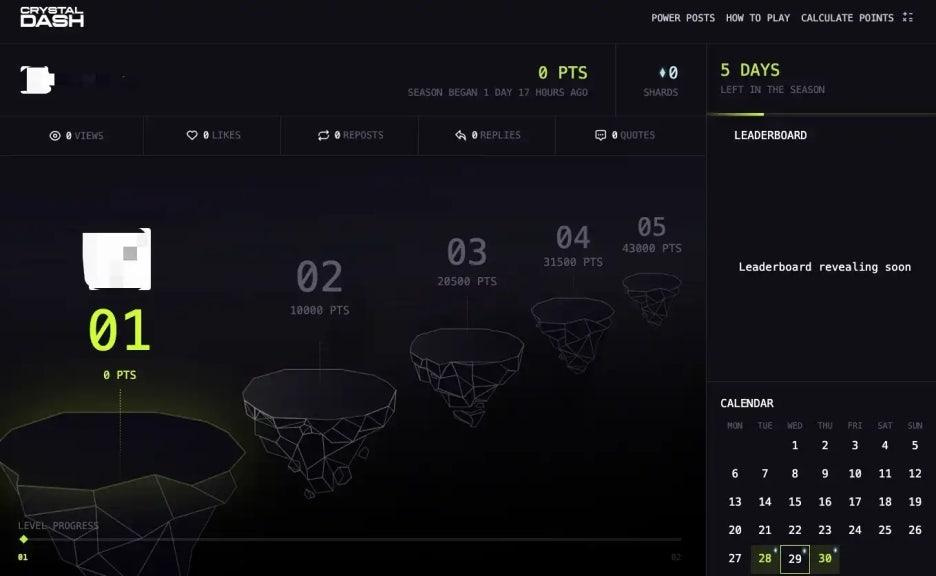
Making a “good” game always pays off? Maybe, but does not seem to be the case for Web3 games at the moment. More Web3 gaming projects are prioritizing gaining blatant exposure over focusing on the quality of their gameplay to attract audiences. Numerous projects heavily depend on viral marketing, particularly through X. They boost their project's visibility by incentivizing airdrop famers to boost up their posts’ likes, reposts, and comments. Farmers earn points for these engagements, which are later converted into rewards through "token airdrops."
The introduction of social farming in blockchain games ignited numerous debates. Mentioning a specific token ticker repeatedly in comments was considered spam, resulting in significant pushback. However, a pivotal moment arrived when Portal, a Web3 game development and publishing platform that is also considered as a trailblazer in social farming for Web3 game projects, was listed on Binance. This spurred many others to engage in extensive airdrop farming activities.
In a bid for marketing success, some projects have turned a blind eye to participants using multiple accounts for social farming. Yet, a project’s token amount allocated for rewarding social farming are limited. This, as a result, has diluted the amount of token recieved per account, hindering the EV for organic users who participated in social farming.
Recently, three gaming projects - $MON (Mon Protocol), $PARAM (Param Labs), and $ULTI (Ultiverse) - launched campaigns that incorporated social farming for airdrops. Let's delve deeper into these three case studies.
Case 1
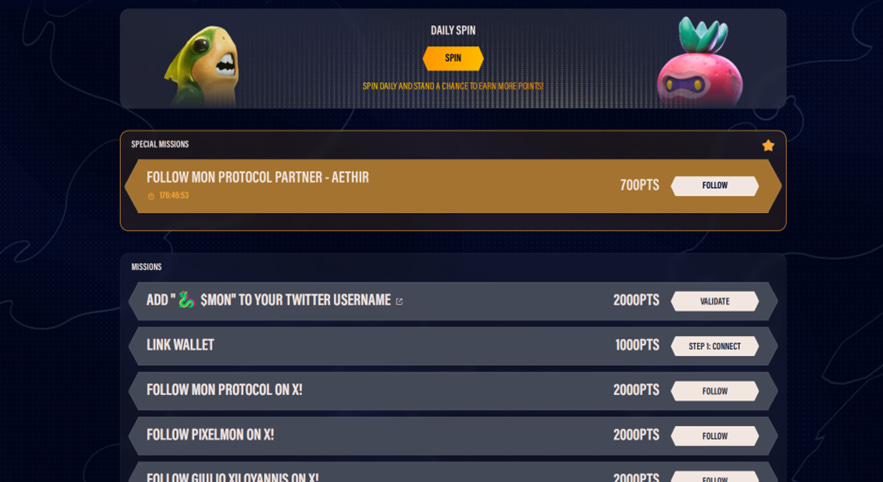
Mon Protocol, the publisher of Pixelmon, which aims to be the ‘Web3 Pokémon,’ launched a dedicated social farming platform to boost up their exposure on socials. Participants could earn points through designated social media quests, and the platform’s referral system encouraged more engagement. This initiative resulted an impressive number of 1.9 million account registrations, 1.3 million wallet registrations, and 300,000 daily active users. Unfortunately, during the $MON Token Generation Event, participants did not receive compensation for their social airdrop points.
Case 2
Param Labs, a Web3 game ecosystem platform, launched a social farming platform that attracted over one million participants in just two months. As the social farming campaign kicked off, Param Labs' Twitter following surged to more than 900,000. While more than half of the participants were eligible for the $PARAM airdrop, the project decided to release only 50% of the tokens upon the Token Generation Event for airdrops of 100 tokens or more, attempting to reduce sell pressure.
Case 3
Ultiverse is a game development and publishing platform that focuses on AI infrastructure. They have launched their social farming platform named 'Ulti-Pilot, Mission Runner,’ where users can earn Soul Points by completing missions. Recently, the project allowed participants to check their eligibility for the $ULTI airdrop and the conversion rate of $ULTI for the accumulated Soul Points. Despite the project's advancements and the community it has cultivated since 2021, the community's response to the reward amount was predominantly negative.
As most hyped gaming projects that integrated social farming as their marketing strategy yielded unsatisfactory results, participants are now feeling more skeptical about the whole point of social airdrop farming. Since $PORTAL, no subsequent project has managed to airdrop significant value of rewards through social farming in the following months.
Nonetheless, many gaming projects are still incorporating social farming into their airdrop campaigns, each adding their own unique twist. For instance, Xterio, a Web3 game development and publishing platform, encourages participants to create detailed threads about the project during the farming period, prioritizing effort over mindlessly clicking share buttons.
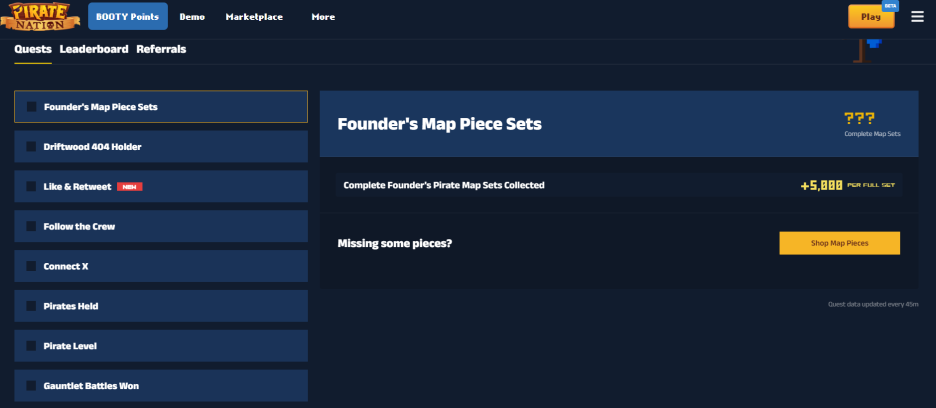
On the other hand, Pirate Nation by Proof of Play is an on-chain RPG currently running a social farming campaign, and they offer multipliers to NFT and in-game item holders, demanding active engagement within the game. The project has extended its social outreach to Discord by partnering with various communities and rewarding users in affiliated projects’ Discord servers. Both initiatives aim to distinguish themselves from other social farming ventures.
In summary, the current state of social farming marketing: began positively, currently experiencing a drop, numerous projects still active and experimenting with adjustments. While the momentum persists, there is a concern about game projects losing their essence as games and solely becoming tools for viral marketing. Despite Param Labs’ efforts in social farming, their goal to become the ‘Web3 Fortnite’ since 2021 has largely gone unnoticed by many.
🎮 Supervillain Labs: Where Games Take Center Stage
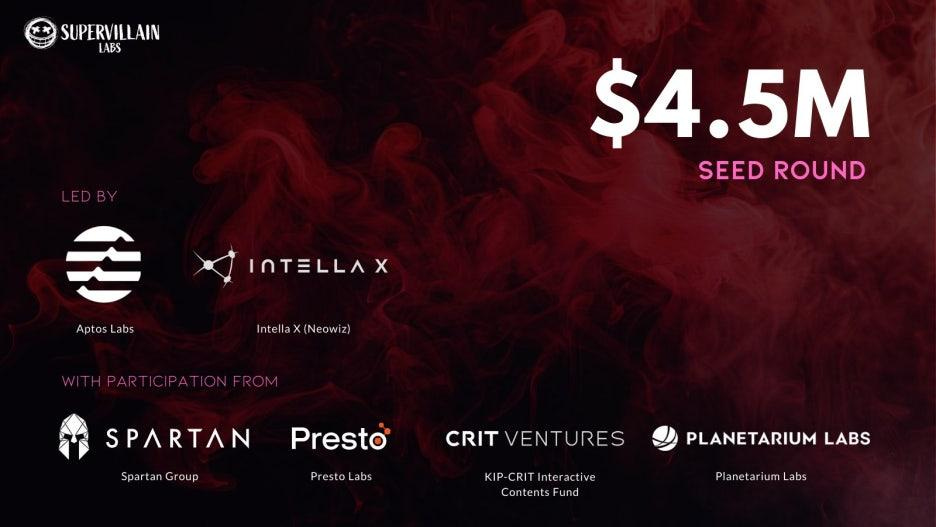
Supervillain Labs, a blockchain game startup founded by former key members of MetaPixel, a Web3-based game ecosystem project that disbanded last September, has recently secured a $4.5 million seed funding round led by Aptos Labs and Intella X. Before MetaPixel was discontinued, the team had built a strong reputation in the blockchain gaming community with the beta test of their flagship RPG title, 'Gran Saga: Unlimited.' Currently, Supervillain Labs is running a campaign for users to synthesize ‘Sidekick NFTs’ for use in their upcoming game.
Supervillain Labs is currently working on an idle RPG on Aptos and has future plans to develop a PC-based MMORPG named PROJECT ARK. Drawing from their success with 'Knight Survivors,' an idle RPG released during the MetaPixel era, they are feeling confident about starting from a familiar standpoint. The new game adheres to their "game-first" philosophy since MetaPixel; hence, there are no current intentions to issue tokens.
A notable aspect of Supervillain Labs is its community-driven growth. The project equips key community members with resources or NFTs, motivating them to establish their own communities. This strategy seeks to harness authentic word-of-mouth marketing instead of the trending social farming practices, aiming to depart from conventional Web2 based marketing strategies and attracting genuine users to the ecosystem.
While the project tries to show its authenticity towards gaming, there are concerns about its resonance with the current speculative and profit-driven nature of blockchain game users. Nevertheless, many players and key opinion leaders have been attracted to the project's idealistic vision since the MetaPixel days.
In the Web3 realm, a project that can capture the attention of KOLs with its vision rather than immediate profits is unique, making Supervillain Labs a standout worth keeping an eye on.
🎮 Spacebar of the Community, by the Community, for the Community
With the TGE for Blast, an L2 ecosystem centered around "native yield," on the horizon, numerous Web3 users are ramping up their efforts in "gold farming," Blast’s unique currency system that will be converted to $BLAST upon TGE. Several projects within Blast are now gaining traction, with Spacebar standing out as a particularly noteworthy project due to its impressive on-chain metrics following a recent game mode update.
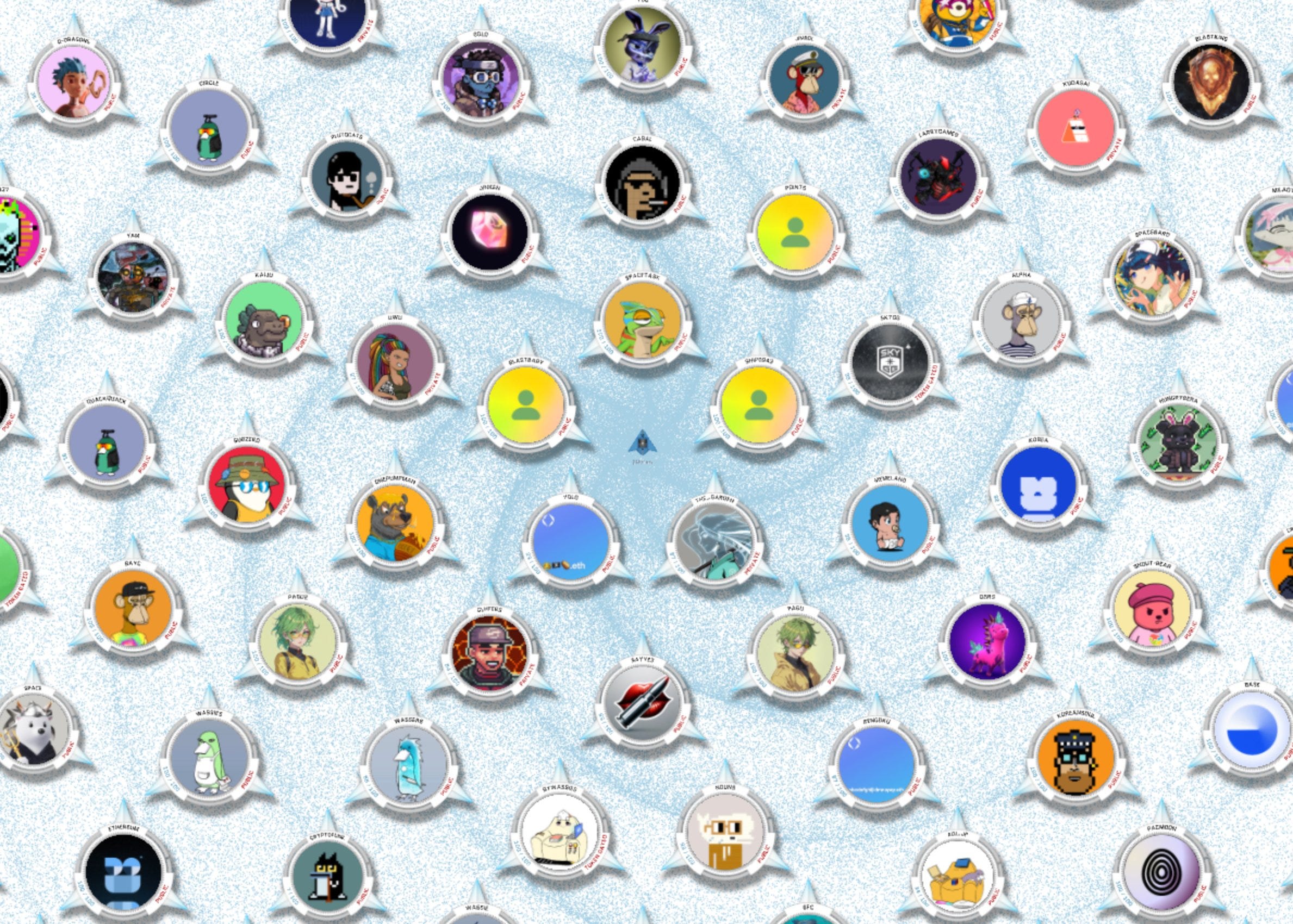
Spacebar is a social/game based project launched on Blast with the slogan "An on-chain playground for degens, NFTs, and communities." In Spacebar, users can mint a Protoship NFT by selecting one of their previously owned ERC-721 NFTs as their on-chain identity. They can also join a guild system centered around NFTs called "Squares" and compete with other Squares.
Unlike many other projects on Blast, Spacebar focuses on collaborative effort and cooperation within communities and has established a reward system where users can earn an off-chain currency called "Square Spirits" through synchronized quests.
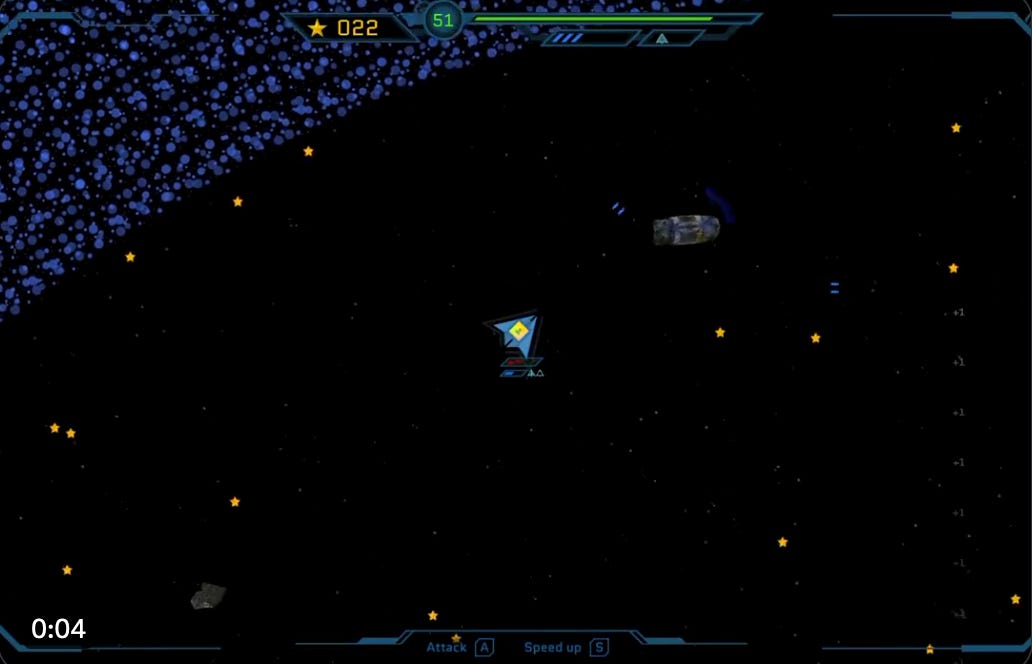
On May 30, Spacebar launched its first hyper-casual game mode called Star Sweepers. The game, reminiscent of the classic arcade game Galaga, tasks players with piloting their Protoship for one minute, dodging meteors, and collecting as many stars as possible. In this game, players can earn Blast Gold through two direct methods:
Attain high scores in the ranked mode, offering three daily games, and earn rewards on the leaderboard.
Gather gold bars that spawn randomly during the game, each worth 3 Blast Gold.
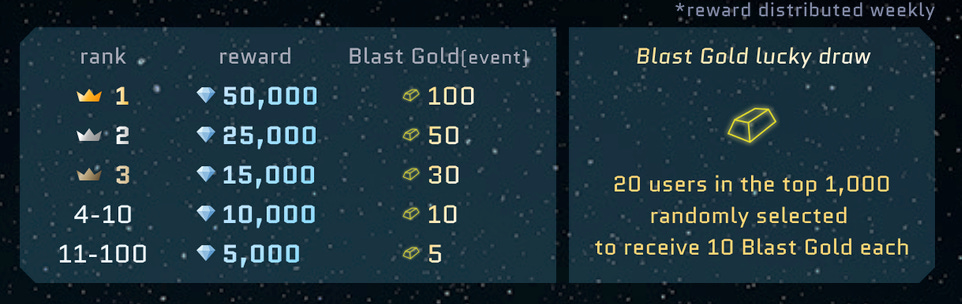
Furthermore, players ranked in the top 1,000 on the leaderboard qualify for a Blast Gold lucky draw. In this draw, 20 users are randomly selected to receive 10 Blast Gold each. If you're thinking, “Do I have to be good in the game to earn rewards?” – welcome to the real world of gaming, just in case you are new here. Still, to further engage users who are less experienced or skilled in gaming, Spacebar has integrated the game's reward system with the Square system.
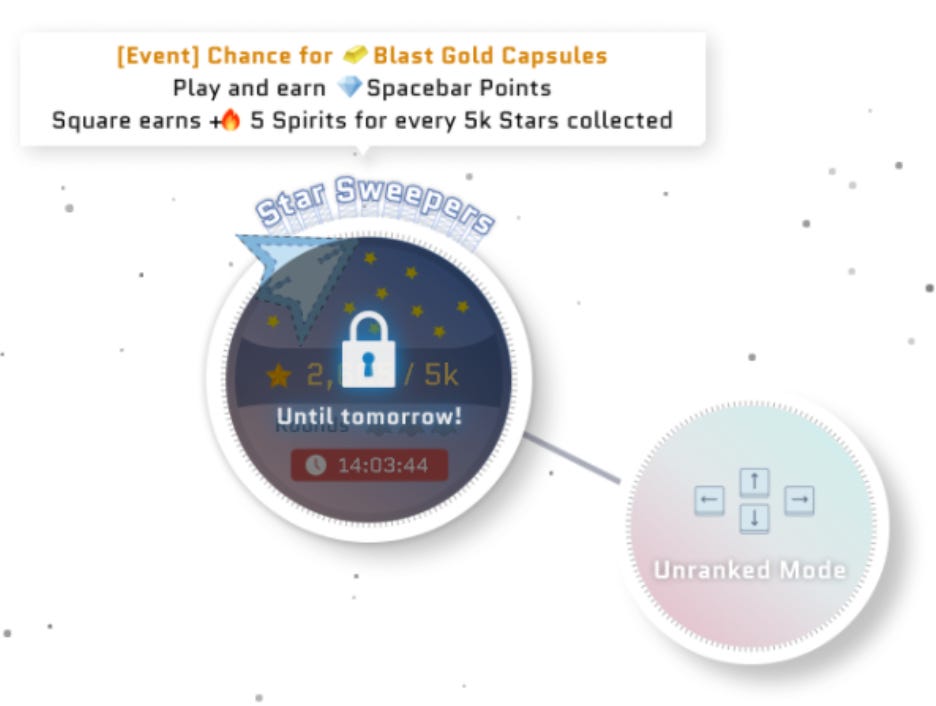
For every 5,000 points accumulated by Square members via Star Sweepers, the Square receives five Square Spirits. The team has been constantly stressing the importance of Square Spirits in distributing gold, ensuring that all players, not just the top-ranked ones, can boost their Square’s gold rewards by actively participating. As the total pie of the Square grows larger, more Blast Gold rewards trickle down to each individual member.
Since its launch, Star Sweepers has achieved impressive statistics: more than 11,000 unique players, 65,000 ranked games played, and around 2,600 gold obtained in-game within just four days. Considering the limited gaming content available on Blast, Spacebar, an actual enjoyable game that merges social interaction, and gamification, could potentially garner widespread support.
One notable feature that distinguishes Spacebar in Blast is its focus on fostering community values within its protocol. The project aims to strengthen unity among these communities, aiming to build not just a loyal user base but a network of diverse communities that will continue using the protocol even as interest in Blast Gold diminishes.
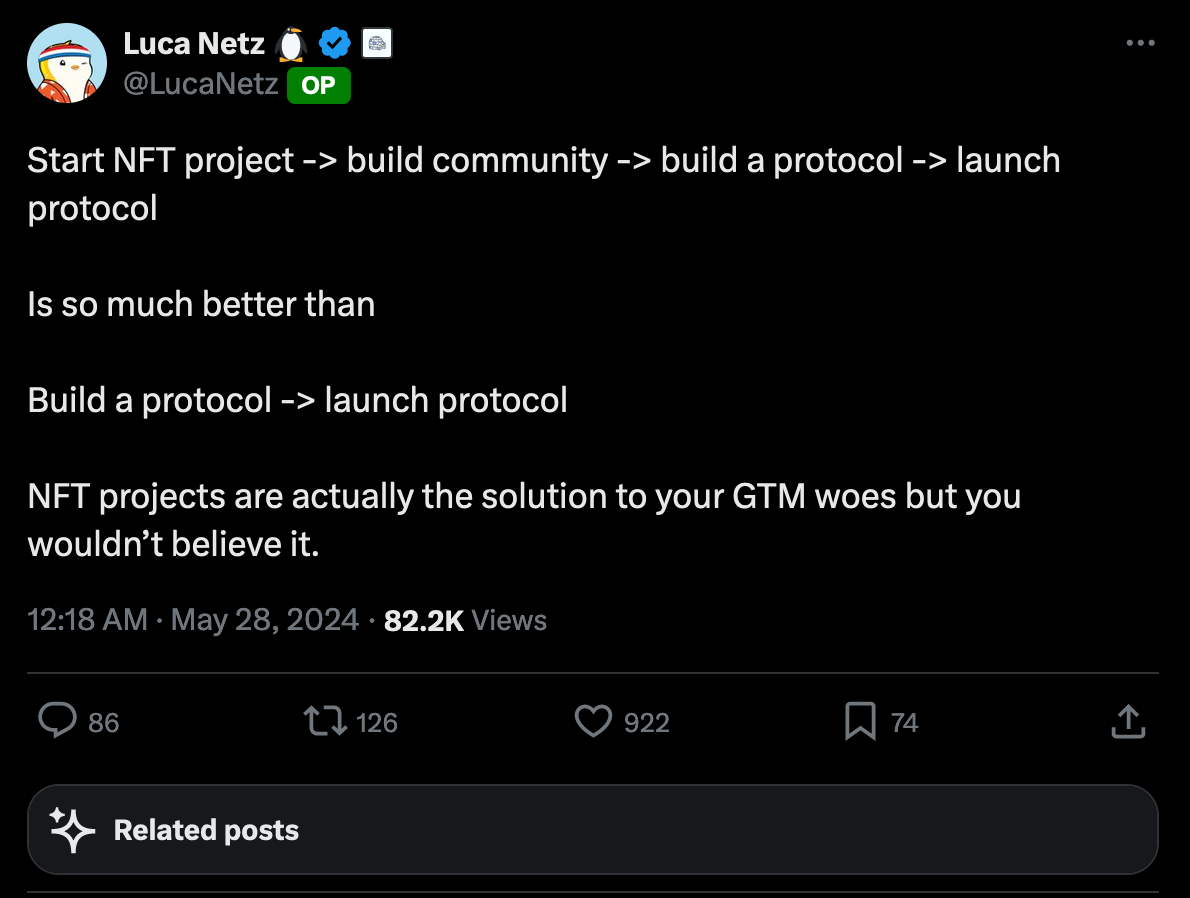
Luca Netz, CEO of Pudgy Penguins, a project making waves in the NFT scene with its impressive GTM strategy, suggests that establishing a solid community through NFTs prior to protocol launch is more effective than just building and then introducing the protocol to the world. Though the detailed plans and roadmap outlining Spacebar's long-term vision have not been disclosed, the current formation of multiple communities enjoying Spacebar’s content is a promising sign.
And that concludes this week's edition of SKYGG’s Weekly Deep Dive! Your feedback is highly appreciated as it helps us improve our content. If you enjoyed our newsletter, please consider subscribing. We cover Web3 topics every week, and your subscription greatly supports our work.
Don't miss out on next week's issue of SKYGG’s Weekly Deep Dive, where we'll bring you even more engaging and up-to-date content on the latest in Web3. Thank you for your continued support!
All predictions, estimates, forecasts, targets, and opinions in this Substack can change without notice and may differ from or contradict other viewpoints. This content is for informational purposes only and should not be used as a basis for making investment decisions. Do not consider this information as complete or final.